We use cookies to improve your experience. By using BondbloX, you agree to our use of cookies.
Bond Market News
US Core PCE Inflation Holds at 3.3%
August 27, 2026

US Treasury yields rose by 1-2bp across the curve. On the data front, the PCE Price index YoY came in at 3.7% vs. expectations of 3.6% and the prior month’s print of 3.7%. The Core PCE Price index YoY came in at 3.3%, in line with expectations and the prior month’s print. The second estimate of US Q2 GDP came it at 1.5%, in-line with the estimates but lower than prior print of 2.1%. The preliminary Durable Goods Order index came in at 1.1%, beating estimates and prior month’s print of 0.5%. The dollar posted its biggest gain in more than two weeks, clawing back around half of the losses.
Looking at equity markets, the S&P and Nasdaq both ended flat. Nvidia reported its 2Q earnings, with revenue at $96.2bn (up 106% YoY) vs. expectations of $91.9bn. US IG CDS spreads tightened by 0.2bp, while HY CDS spreads tightened by 0.5bp. European equity markets ended mixed. European IG CDS spreads were 0.1bp tighter, and Crossover spreads tightened by 0.3bp. Asian equity markets have opened mixed this morning. Asia ex-Japan CDS spreads were flat.
Rating Changes
Term of the Day
Personal Consumption Expenditures (PCE)
Personal Consumption Expenditures (PCE) is an inflation metric measuring consumer spending on goods and services, released by the US Department of Commerce. The Fed’s preferred measure of inflation is the Core PCE – this refers to the Headline PCE after stripping out two volatile components, namely, food and energy.
The US also publishes another inflation metric, the CPI (Consumer Price Inflation), a key inflation indicator. CPI and PCE differ on four fronts: formula, weight, scope and other factors. As per the BLS, “CPI sources data from consumers, while PCE sources from businesses. The scope effect is a result of the different types of expenditures CPI and PCE track…CPI only tracks out-of-pocket consumer medical expenditures, but PCE also tracks expenditures made for consumers, thus including employer contributions. The implications of these differences are considerable.”
Talking Heads
On Inflation Data Keeps Fed Hike Bets Alive- Vail Hartman, BMO Capital Markets
“Core-PCE was consistent with the Fed’s characterization of the July inflation data as somewhat encouraging, but sufficient to keep the risk of a September 16 rate hike in play.”
On Key US Inflation Gauge Posts Muted Advance, Spending Stalls – Bloomberg
“The main takeaways from July’s personal income and outlay report are that the underlying inflation pace is relatively soft, and real spending is tepid. We expect the Fed to stay on hold for the rest of the year.”
On Size of Long-Dated Bond Sales – Martin Tobias, Morgan Stanley
“Expanded buybacks themselves are likely just a bridge until they get to November refunding… The market-moving event ultimately will be the manner with which Treasury goes about shortening the weighted-average maturity.”
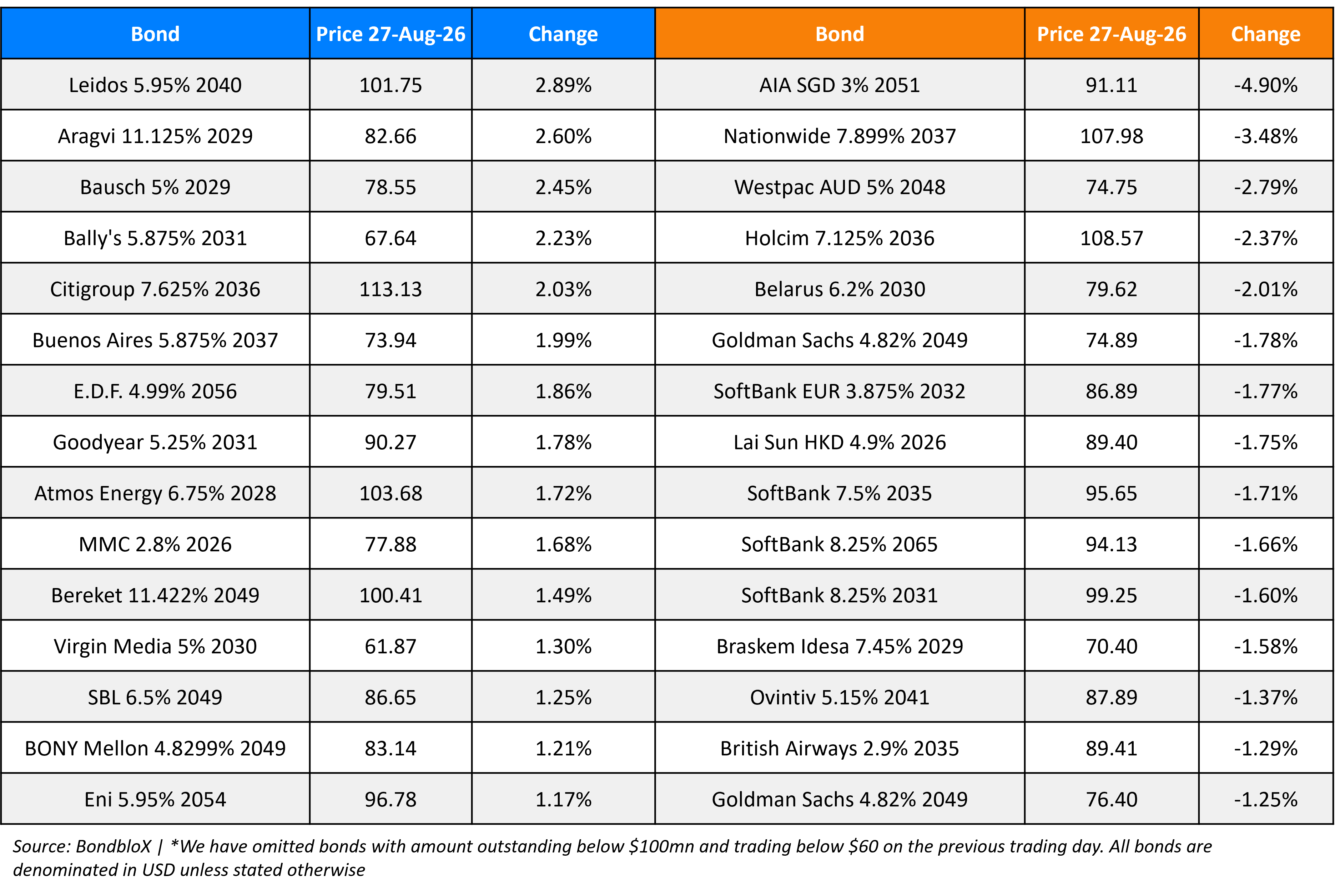
Top Gainers and Losers- 27-Aug-26*
Go back to Latest bond Market News
Related Posts: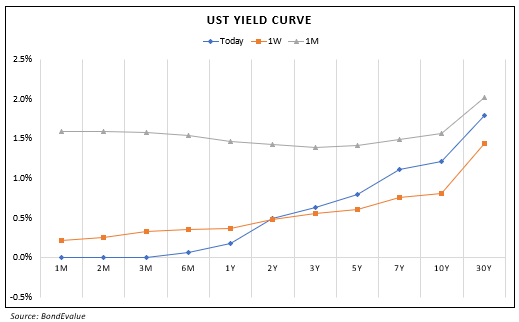


Our Awards







BondbloX Pte. Ltd. is regulated by the Monetary Authority of Singapore as a Recognised Market Operator ("RMO") and exempted from Section 49(1) of the Securities and Futures Act (Cap. 289) ("SFA") under Section 49(7) of the SFA.