We use cookies to improve your experience. By using BondbloX, you agree to our use of cookies.
Bond Market News
Fed Rate Hike Expectations Tempered after NFP Softens
July 3, 2026

Front-end Treasury yields moved lower by 4-5bp with the curve witnessing a bull steepening after a modest jobs report. US NFP for June showed a drop of 57k jobs, coming in much lower than estimates of a 113k gain. Besides, the NFP numbers for May was also revised lower to 129k from 172k. Average Hourly Earnings (AHE) YoY rose by 3.5%, inline with estimates. The Unemployment Rate came-in at 4.2% vs. expectations of 4.3%. Following this, markets have slightly priced out their expectations of the Fed hiking rates this year. From initally pricing in a 25bp hike in October and another potential hike in December, markets are now only pricing in one rate hike by December.
Looking at US equity markets, the S&P ended flat while the Nasdaq ended lowe by 0.8%. US IG CDS spreads were tighter by 0.2bp and HY CDS spreads tightened by 1.6bp. European equity markets ended higher. European IG CDS spreads were 1.9bp tighter, while Crossover spreads tightened by 2.6bp. Asian equity markets have opened higher this morning. Asia ex-Japan CDS spreads were 0.5bp wider.
Rating Changes
- Moody’s Ratings upgrades China Minmetals’ ratings to A3; outlook stable
- Fitch Revises Gerdau’s Outlook to Positive; Affirms Long-Term IDR at ‘BBB’
- Pitney Bowes Inc.’s Guaranteed Unsecured Notes Downgraded To ‘B’ On Greater Secured Debt Mix; Other Ratings Unchanged
- Getty Images Inc. Downgraded To ‘CCC+’ On Shutterstock Merger Termination And Liquidity Concerns; Outlook Negative
- Moody’s Ratings downgrades Mercer’s CFR to Caa3; outlook stable
Term of the Day: Covenants
Debt covenants (also known as loan covenants, banking covenants or financial covenants) are lending restrictions in financial agreements that limit the actions of the borrowers. Lenders typically use covenants to ensure borrowers will operate within certain rules so that borrowers can repay their debt.
Covenants can either be positive or negative. With positive covenants, borrowers promise to do certain actions such as maintain a certain debt to equity ratio, interest coverage ratio, or level of cash flow, etc. With negative covenants, borrowers are restricted from certain actions such as to sell certain assets or incur more debt. Investors can find the covenants on a bond in its offering circular or prospectus.
Talking Heads
On AI Debt Deluge Making Credit Market Look Safer While Masking Risk
Ben Emons, Highline Asset Management
“A sudden bubble burst in AI-linked credit would ripple through the broader investment-grade bond market, widening spreads and exposing investors to concentration risks… Today’s pricing suggests markets are not fully discounting the tail risk that a narrow, debt-funded AI boom could morph into a systemic credit event.”
On Bond Investors Pulling Back as Central America Rallies Go ‘Too Far’
Christopher Mejia, T. Rowe Price
“Not a single country is misbehaving from a policy perspective. Has the rally gone too far? In some pockets I would say yes.”
Carlos de Sousa, Vontobel
“We still think the Bahamas is a compelling investment. The rest of the region no longer offers such attractive relative valuations.”
Fernando Losada, Oppenheimer & Co.
“With spreads now much tighter, asset and country selection is of the essence”
On Wall Street Betting Rallying Markets Will Absorb Every Market Blow
Raphael Thuin, Tikehau Capital
“Record earnings growth and AI-driven enthusiasm have pushed risk assets to new highs. That said, H2 is unlikely to be a simple replay of H1”
Jean Boivin, BlackRock Investment Institute
“We prefer earning income in short-term maturities, especially euro-area government bonds, over relying on long bonds with high duration or sensitivity to rate moves”
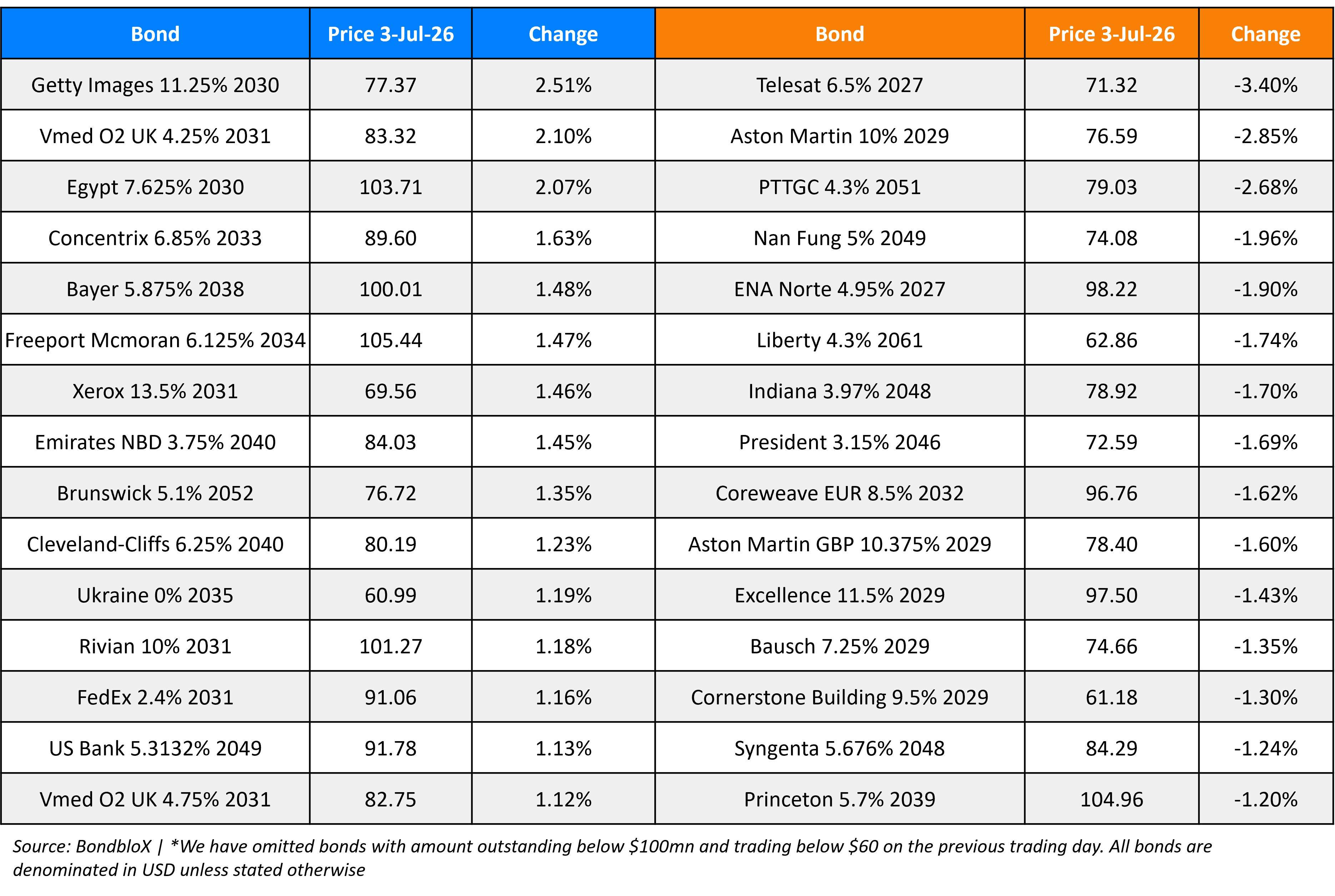
Top Gainers and Losers- 03-Jul-26*
Go back to Latest bond Market News
Related Posts: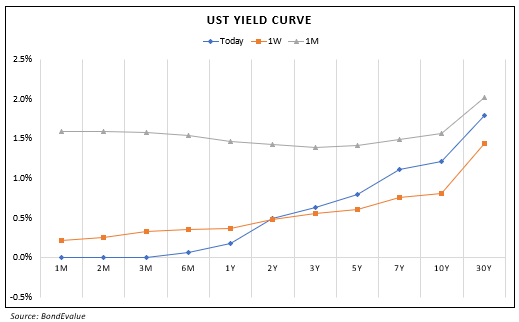


Our Awards







BondbloX Pte. Ltd. is regulated by the Monetary Authority of Singapore as a Recognised Market Operator ("RMO") and exempted from Section 49(1) of the Securities and Futures Act (Cap. 289) ("SFA") under Section 49(7) of the SFA.